
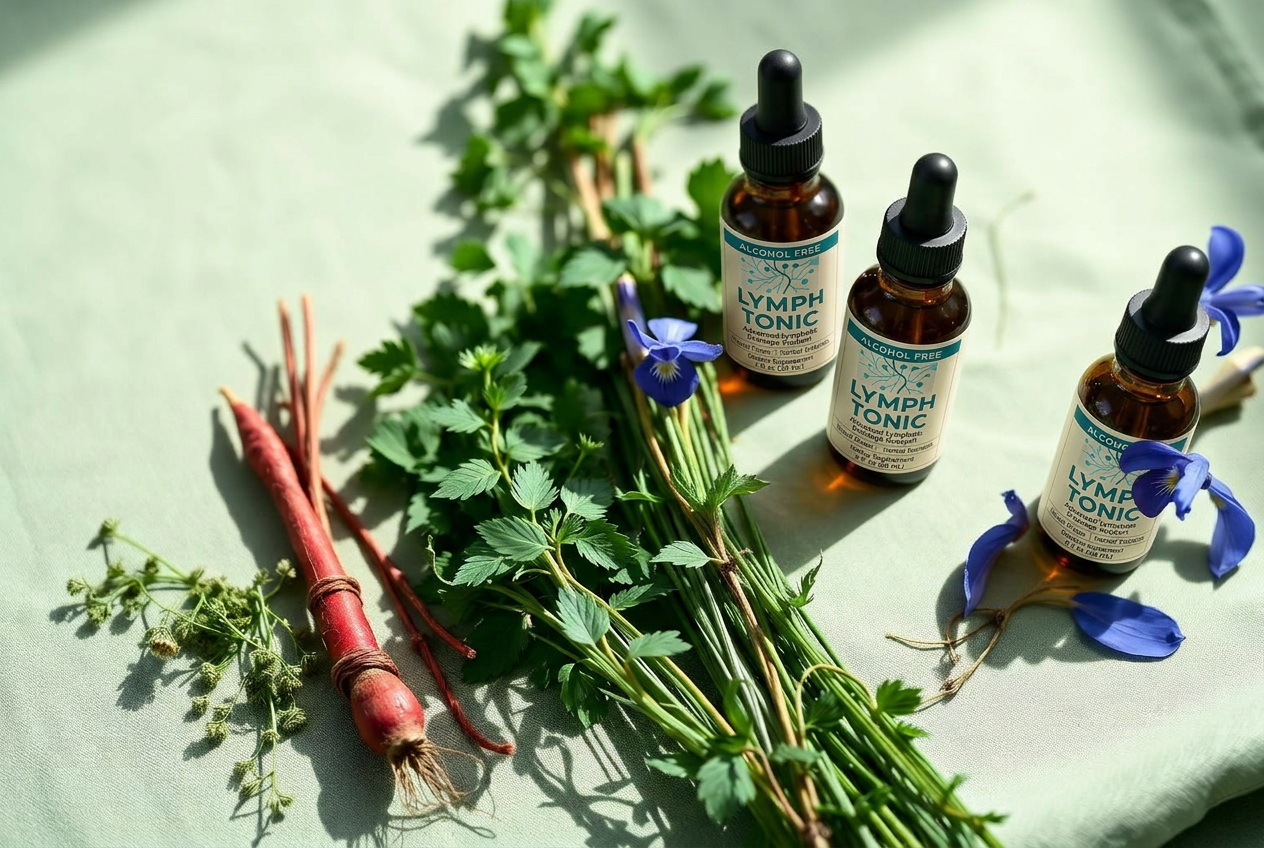
Editorial Disclosure: This investigative article contains affiliate links. If you purchase through our links, we may receive a commission at no additional cost to you. Our editorial team researches products independently. This Lymph Tonic review is based on publicly available information, ingredient science, and herbal monographs. Results vary; we make no medical guarantees.
The Science of LTB4 — The "Chemical Clog"
The most compelling aspect of Lymph Tonic is its focus on Leukotriene B4 (LTB4). This is not a fabricated marketing term; it is a real, heavily researched inflammatory molecule.
The Stanford Connection
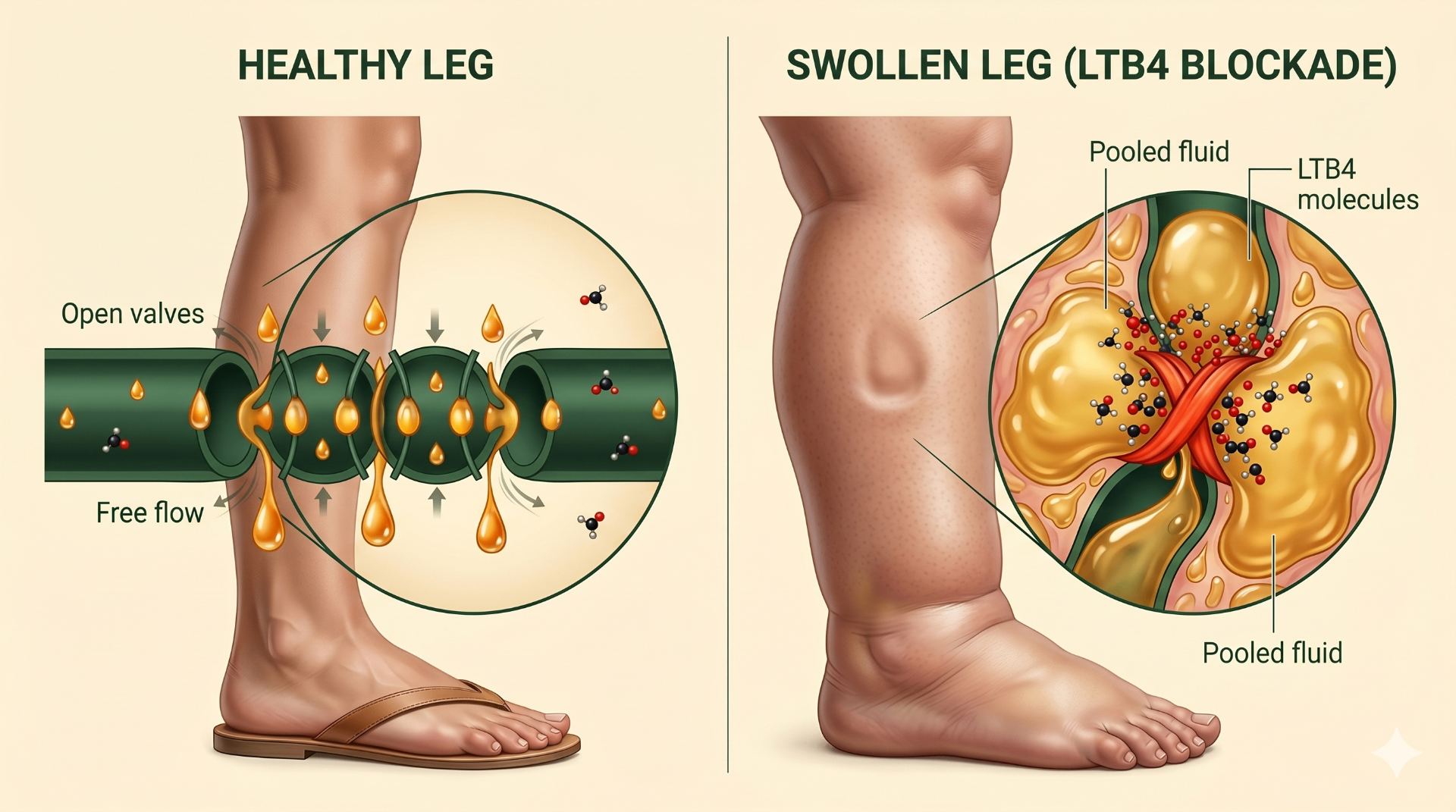
In 2015, Dr. Stanley Rockson, a prominent cardiologist and Director of the Center for Lymphatic and Venous Disorders at Stanford University, published groundbreaking research in Science Translational Medicine. His team discovered that lymphedema and chronic swelling are not just physical plumbing problems — they are driven by a specific chemical blockade.
- The Discovery: Elevated levels of LTB4 actively inflame lymphatic vessels, causing them to physically kink and shut down.
- The Impact: When LTB4 is high, vessels cannot perform rhythmic contractions — and fluid becomes trapped, regardless of elevation or compression.
- The Reversal: Animal studies showed that when LTB4 production was blocked, lymphatic flow was restored, swelling was dramatically reduced, and damaged vessels began to repair themselves.
How Lymph Tonic Uses This Science
While Dr. Rockson's research focused on developing pharmaceutical LTB4 inhibitors (which face years of FDA red tape), the creators of Lymph Tonic — led by naturopathic researcher Dr. Wilhelm Brenner — looked to botanical medicine, specifically traditional Aboriginal remedies, to find natural compounds that inhibit the LTB4 pathway. The premise is simple: by using specific plant extracts to block LTB4, the formula aims to "unkink the hose," allowing the body's natural vasomotion to resume so trapped fluid can finally drain.
The Core Problem — Why Do Legs Swell?
To understand whether Lymph Tonic can fix the problem, we first have to understand the physiology of drainage. Unlike the circulatory system, which relies on the heart to actively pump blood, the lymphatic system is entirely passive. It depends on tiny, rhythmic contractions of the lymphatic vessels — a process called vasomotion — as well as muscle movement, to push fluid upward against gravity.
When this system becomes sluggish or damaged (due to surgery, radiation, genetics, or chronic inflammation), fluid stops moving. It becomes viscous and stagnant, trapping metabolic waste in the interstitial spaces of your leg tissues. This stasis results in three primary symptoms:
- Tissue Tension: A painful, "tight" sensation where the skin feels stretched to its limit.
- Aching Limbs: A deep, dull throb caused by the accumulation of cellular waste products.
- Visible Edema: The classic "tree-trunk" appearance where ankles and calves lose their definition.
Most conventional "fixes" fail because they only address the symptoms. Diuretics force the kidneys to flush water, but they do not repair the lymphatic vessels. Compression garments squeeze fluid upward, but the moment you take them off, gravity pulls the fluid right back down. Lymph Tonic claims to be different because it targets the chemical root cause of the swelling.
The 12-Compound Botanical Synergy — A Forensic Breakdown
Our analysis of the Lymph Tonic formula reveals a matrix of 12 precision-targeted compounds. Unlike generic "water pills," this formulation is designed to address three distinct phases of lymphatic recovery: breaking the chemical clog, thinning the viscous fluid, and supporting the filtration organs.
The LTB4-Blocking "Heavy Lifters"
Cleavers
Galium aparine
The primary lymphagogue in traditional herbalism — utilized to thin stagnant fluid and serving as the foundational compound aimed at breaking down the LTB4 inflammatory blockade.
Red Root
Ceanothus americanus
Targets fluid viscosity. When lymphatic fluid becomes thick and "sludge-like," Red Root acts as a thinning agent, allowing the fluid to flow more easily through narrowed vessels.
Blue Flag Root
Iris versicolor
Included for glandular detoxification. As trapped fluid is mobilized from the legs, it ensures the waste is effectively filtered by the lymph nodes rather than re-pooling.
The Systemic Filtration Matrix
To prevent the mobilized fluid from simply moving to another part of the body, the formula includes a secondary support system that addresses fluid, vessels, and filtration organs simultaneously.
Burdock Root
A renowned deep-tissue cleanser that supports blood and lymph filtration.
Echinacea Angustifolia
Stimulates the immune-lymphatic interface.
Southern Prickly Ash Bark
Enhances general circulation, assisting the upward mechanical movement of fluid.
Plantain Leaf
Used to soothe inflamed mucosal surfaces and lymphatic vessels during the rapid drainage phase.
Slippery Elm Bark
Soothes mucosal surfaces and supports the body during accelerated drainage.
Sheep Sorrel
Supports the body's primary elimination pathways.
Proprietary Extract I
Part of the proprietary blend completing the 12-compound complex.
Proprietary Extract II
Supports filtration organs alongside the primary drainage trio.
Proprietary Extract III
Completes the synergistic matrix targeting fluid, vessels, and filtration.
Editorial Note: The formula also includes three "Proprietary Extracts." While proprietary blends are common in the supplement industry to protect intellectual property, they do reduce absolute transparency regarding specific dosages. However, the presence of the primary active botanicals is clearly established.
Ready to support your lymphatic drainage naturally?
Check Availability & Current Pricing*Affiliate link — we may earn a commission at no extra cost to you.
The Tincture Advantage — Why Liquid Matters
A critical differentiator for Lymph Tonic is its delivery method. It is a liquid tincture, not a capsule. For individuals suffering from chronic swelling, this is a massive advantage for two reasons:
- Mucosal Absorption: When you place the tincture under your tongue or mix it with water, the active compounds begin absorbing immediately through the mucosal membranes in the mouth. This bypasses the harsh acidic environment of the stomach, leading to significantly faster systemic entry compared to delayed-release capsules.
- Compound Extraction: Many crucial active ingredients — particularly the resinous compounds in Red Root — are notoriously difficult for the body to break down in dry powder form. An organic alcohol-based tincture ensures these compounds are fully extracted and highly bioavailable. The manufacturer claims up to 90% bioavailability compared to roughly 20% typical of powdered supplements.
Oral Tonic vs. Manual Lymphatic Drainage — and Honest Considerations
Many seek relief through Manual Lymphatic Drainage (massage). While MLD provides a temporary mechanical "pump" for the fluid, it does not address the LTB4 chemical clog.
Manual Intervention
A 60-minute massage provides an external "pump" for the fluid. However, once the massage ends, gravity immediately resumes its work — and the chemical blockade remains.
Systemic Botanical Support
An oral tonic provides a "24/7" internal stimulus. By chemically unblocking the vessels (blocking LTB4) and supporting intrinsic vasomotion, it improves the body's autonomous ability to move fluid — a sustainable baseline a weekly massage cannot match.
Honest Drawbacks and Considerations
No review is complete without an honest assessment of a product's limitations. While Lymph Tonic is well-formulated for its intended purpose, three factors are worth weighing:
- It Requires Consistency: This is not a quick fix. The tincture must be taken daily, and for severe cases, twice daily. Missing doses allows LTB4 levels to creep back up, stalling progress.
- The Taste: Because it is a potent herbal tincture containing bitter roots like Burdock and Cleavers, the taste is strong and earthy. Most users find it helpful to mix the drops into a small glass of water or morning coffee to mask the flavor.
- Not a Replacement for Medical Care: While Lymph Tonic addresses the inflammatory blockade, it is not a cure for underlying heart or kidney failure. Individuals with clinical lymphedema, congestive heart failure, or severe kidney disease must consult their physician before starting any new drainage protocol.
Investigative Note: For many, the most effective protocol pairs an oral tonic for baseline drainage with daily movement and elevation.
Ready to support your lymphatic drainage naturally?
Check Availability & Current Pricing*Affiliate link — we may earn a commission at no extra cost to you.
The "Timeline of Relief" — Setting Realistic Expectations
One of the most important aspects of our Lymph Tonic review is setting realistic expectations. The lymphatic system is notoriously slow — it moves at a fraction of the speed of the circulatory system. If you expect your legs to shrink overnight, you will be disappointed.
Based on the clinical understanding of lymphatic vasomotion and verified customer data, here is the typical timeline of relief:
Phase 1
Days 1–10 · The Chemical Shift
The formula begins to modulate LTB4 levels. Visible swelling may not decrease dramatically yet, but users frequently report a significant reduction in the painful "aching" or "tightness" in their calves as the tissue begins to soften.
Phase 2
Days 14–30 · The Mobilization
As the chemical clog clears and the vessels "unkink," gravity-trapped fluid is finally exported. This is when users typically observe a visible reduction in ankle and calf circumference.
Phase 3
Days 30–90+ · Flow Homeostasis
The system begins to repair itself. Daily fluid accumulation is effectively managed by the body's autonomous drainage network, and many users find they can reduce their reliance on compression garments.
Because of this timeline, a single 30-day bottle is often insufficient for chronic cases. The manufacturer notes that 73% of successful users opt for the 6-month supply to ensure uninterrupted support through all three phases.
Safety Note: This report makes no medical guarantees. While these botanicals have a long history of use, individuals with clinical lymphedema, heart conditions, or kidney disease should consult a physician before beginning any new protocol.
Final Verdict — Is Lymph Tonic the Real Deal?
After a thorough investigation of the LTB4 mechanism, the botanical formulation, and the delivery method, our verdict is highly positive.
Lymph Tonic represents a paradigm shift in how chronic swelling is approached. By moving away from mechanical band-aids — like compression and massage — and targeting the actual chemical blockade (LTB4) highlighted by Stanford researchers, this formula offers a genuine, science-backed path to relief.
For those tired of heavy, aching legs and the daily struggle with compression stockings, Lymph Tonic is arguably one of the most logical, biologically sound supplements currently available in this category.
Lymph Review Report Editorial Rating
4.8 / 5
Based on botanical research, formulation standards, and category fit
Ready to support your lymphatic drainage naturally?
Check Availability & Current Pricing*Affiliate link — we may earn a commission at no extra cost to you.
References
- Tian, W., et al. (2017). "Leukotriene B4 antagonism ameliorates experimental lymphedema." Science Translational Medicine, 9(389).
- Rockson, S. G. (2018). "Lymphedema after Breast Cancer Treatment." New England Journal of Medicine, 379(20), 1937–1944.